
Understanding the Common Shooting Plateau
It happens to almost every enthusiast. You spend weeks or months seeing rapid improvement in your groupings and confidence, and then suddenly, the progress stops. Your shots are consistent but not tighter, and your reload times remain stagnant. This visual plateau is often the result of repetitive practice without a specific goal. If you are doing the same drills every time you visit the range, your muscles and mind have likely adapted to that specific level of stress.
To move past this stage, you have to change your approach. Marksmanship is a perishable skill that requires constant variation to maintain and grow. Many shooters in Tempe and Scottsdale find that they eventually reach a point where self-teaching is no longer enough to correct deep-seated habits. Understanding the mechanics of why you have stalled is the first step toward reaching the next level of proficiency.
The Role of Fundamentals and Fine-Tuning
Often, a plateau is caused by a slight breakdown in the basics that went unnoticed because of early success. Small errors in grip pressure, trigger control, or stance can be masked when shooting at close distances, but they become glaringly obvious as you increase speed or distance. Returning to the core rules of firearm safety and basic handling can often reveal where these tiny leaks in your technique are occurring. Reviewing NSSF firearm safety rules is another great way to ground yourself in the fundamentals before diagnosing technique issues.
Another factor is the psychological aspect of shooting. Research on motor skills suggests that cognitive focus during physical tasks plays a massive role in how we acquire and retain expertise. If you find yourself “zoning out” during a range session, you are likely just burning through ammunition rather than training. Focused, intentional practice is the key to breaking through the ceiling of your current abilities.
Introducing Variety to Your Training
If you want to see growth, you must introduce new challenges. This might mean practicing one-handed shooting, engaging multiple targets, or working on your draw from a holster. Varied training forces the brain to solve new problems, which prevents the stagnation that comes with routine. Many shooters find that structured handgun courses provide the necessary framework to introduce these variables in a safe, controlled environment.
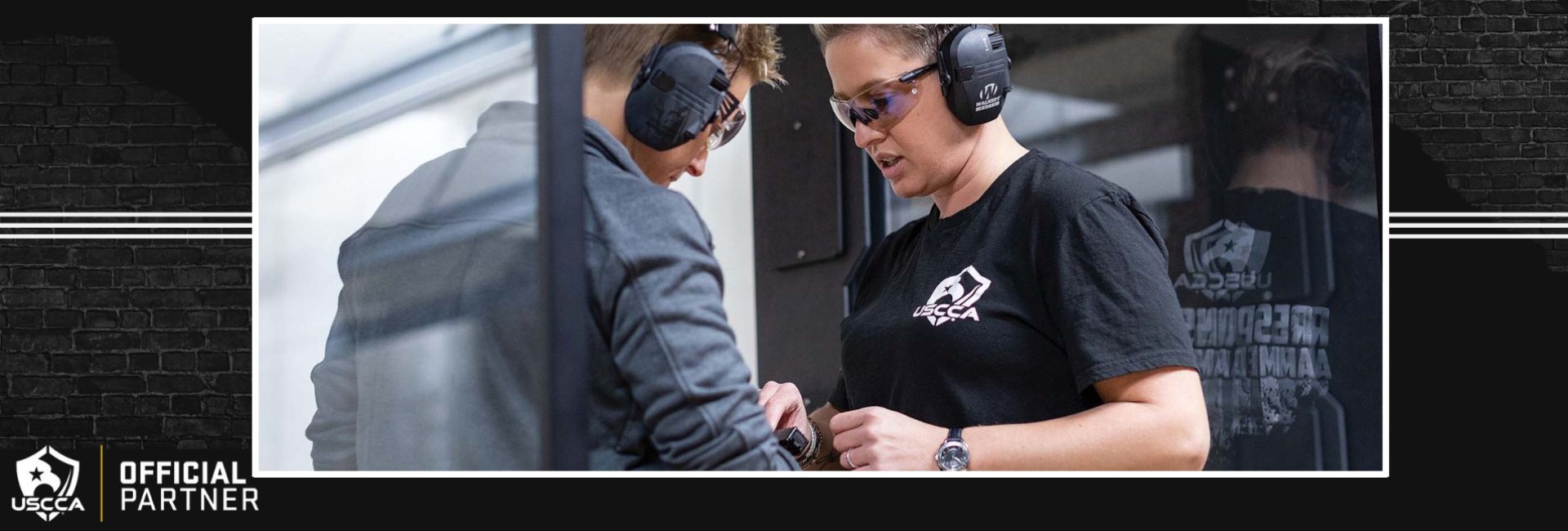
Working with an outside eye is also incredibly beneficial. An instructor can see things you can’t, such as a slight flinch before the break or an inconsistent cheek weld. For those who want faster results, private shooting lessons allow for a personalized diagnostic session. This one-on-one attention ensures that you aren’t just practicing, but practicing the right things, which is the most efficient way to bypass a plateau.
Consistency and Community Support
Growth is rarely a straight line. It involves peaks, valleys, and extended flat periods. Staying motivated during those flat periods is easier when you have a community and a reliable place to train. We focus on providing an educational environment where shooters of all experience levels feel welcome to learn and improve. With a 4.6-star rating from over 800 reviews, we take pride in being a place where the local shooting community can grow together.
Whether you are visiting our locations in Tempe or Scottsdale, the goal is to make every session count. By moving away from mindless repetition and toward structured, goal-oriented practice, you will find that those plateaus are only temporary hurdles. The right gear, a safe environment, and a commitment to learning are all you need to keep your skills sharp.
If you are ready to take the next step in your training and see real results, contact our team today to learn more about our range options and training programs. We are here to help you get set up with the gear and instructor support you need to enjoy your session and follow up with future growth.
Frequently Asked Questions
Why do my shots always pull to the left even though I am aiming correctly?
This is typically a result of improper trigger finger placement or “milking” the grip, where your other fingers tighten as you pull the trigger. Small adjustments in your grip and a focus on a straight-back trigger press can often fix this common issue.
How often should I practice to see consistent improvement?
Consistency is more important than volume. Short, focused sessions once a week are often more effective for building muscle memory than one long, exhausting session once a month. Range time should always be supplemented with dry-fire practice at home (safely) to reinforce fundamentals.
Do I need my own firearm to take an advanced class?
Not necessarily. Many people use rentals to experience different platforms before committing to a purchase. While training with your own equipment is ideal for building specific muscle memory, our educational focus ensures you can learn the necessary techniques on a variety of firearms.
Is it better to practice distance or speed first?
Accuracy and fundamentals should always come first. Speed is a byproduct of efficiency. Once you can consistently hit your target at distance with perfect form, your speed will naturally increase as your movements become more fluid and second-nature.

Get Your Custom Training Plan
Take our quiz and get clarity on where to begin.